
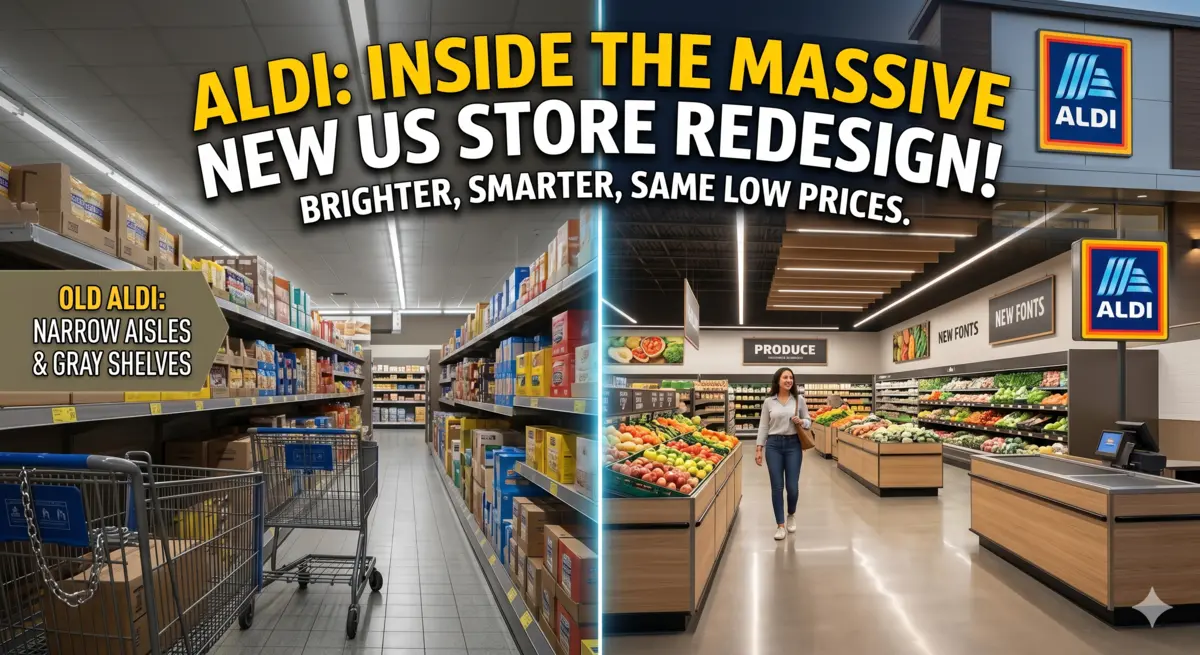
For years, Aldi has been the undisputed king of no-frills grocery shopping. We’ve all happily accepted the narrow aisles, gray shelves, and industrial lighting in exchange for keeping our grocery bills astonishingly low. But if you walk into one of Aldi’s newly redesigned US locations, you might think you’ve stepped into a completely different supermarket.
The German discount giant is rolling out a brand-new, modernized store format across the United States. And before you panic—no, they aren’t raising prices to pay for it.
Here is everything you need to know about Aldi’s sleek new look and what it means for your weekly grocery run.
The “Modular” Makeover: What’s Actually Changing?
Aldi has partnered with Landini Associates—the acclaimed Australian design firm behind the brand’s global modernization efforts—to completely reinvent the language of discount retail. The new US model was quietly piloted at the Promenade Shoppes in Aventura, Florida, late last year, and is now gearing up for a massive nationwide rollout throughout 2026.
Instead of a rigid, one-size-fits-all blueprint, the new format relies on a “modularly adaptable” design. This means the store’s layout, colors, signage, and flow can seamlessly mold to fit different building sizes while keeping the signature Aldi efficiency intact.
3 Upgrades Shoppers Will Notice Immediately:
- Goodbye, Gloom: Say farewell to the stark neon-and-gray aesthetic. The new layout prioritizes a brighter, more contemporary shopping environment with updated fonts, clear pictograms, and an upgraded color palette.
- Smarter Navigation: The modular design creates a more intuitive flow, making it easier to find Aldi’s beloved private-label items, seasonal “Aldi Finds,” and fresh produce without feeling bottlenecked.
- Frictionless Efficiency: The redesign isn’t just about looking good. It’s built to maximize operational speed, from how seamlessly shelves can be restocked to how quickly you can move through the checkout lanes.
Why the Sudden Change in 2026?
Aldi isn’t just giving its stores a facelift for the fun of it; they are preparing for unprecedented US growth.
Recently, Aldi acquired roughly 400 Winn-Dixie and Harveys Supermarket locations across the Southeast. Because these acquired buildings come in all shapes and sizes, Aldi needed a flexible, adaptable store design to efficiently convert them into Aldi locations without starting from scratch.
Coupled with Aldi’s aggressive plan to open 180 new US stores in 2026 (including expanding into new states like Maine and Colorado) and the launch of a redesigned, highly personalized website, the grocer is making a massive play to dominate the American market.
Will This Make Groceries More Expensive?
The short answer: No.
The biggest challenge for any discount grocer is upgrading the shopping experience without passing those costs onto the consumer. Aldi and Landini Associates have spent 14 years collaborating to perfect this exact balance. The new stores are designed to look contemporary without adding a single cent of operational complexity.
You will still need your trusty quarter for the shopping cart, you will still bag your own groceries, and the items will still be displayed in their original shipping boxes.
The Bottom Line
Aldi is proving that “discount” doesn’t have to mean “depressing.” As the new store format rapidly expands across the US, shoppers can look forward to a premium supermarket feel with the exact same budget-friendly receipt at the end of the trip. Keep an eye out—your local Aldi might be the next one in line for a serious glow-up.

Sedha Patel is a personal finance strategist with over 5 years of experience analyzing consumer banking trends, liquidity management, and wealth preservation. With a professional background in accounting and corporate finance, Sedha specializes in translating macro monetary policy into practical money moves for everyday savers. When not dissecting market data, Sedha researches fixed-income allocation models and tax-advantaged investing strategies.