
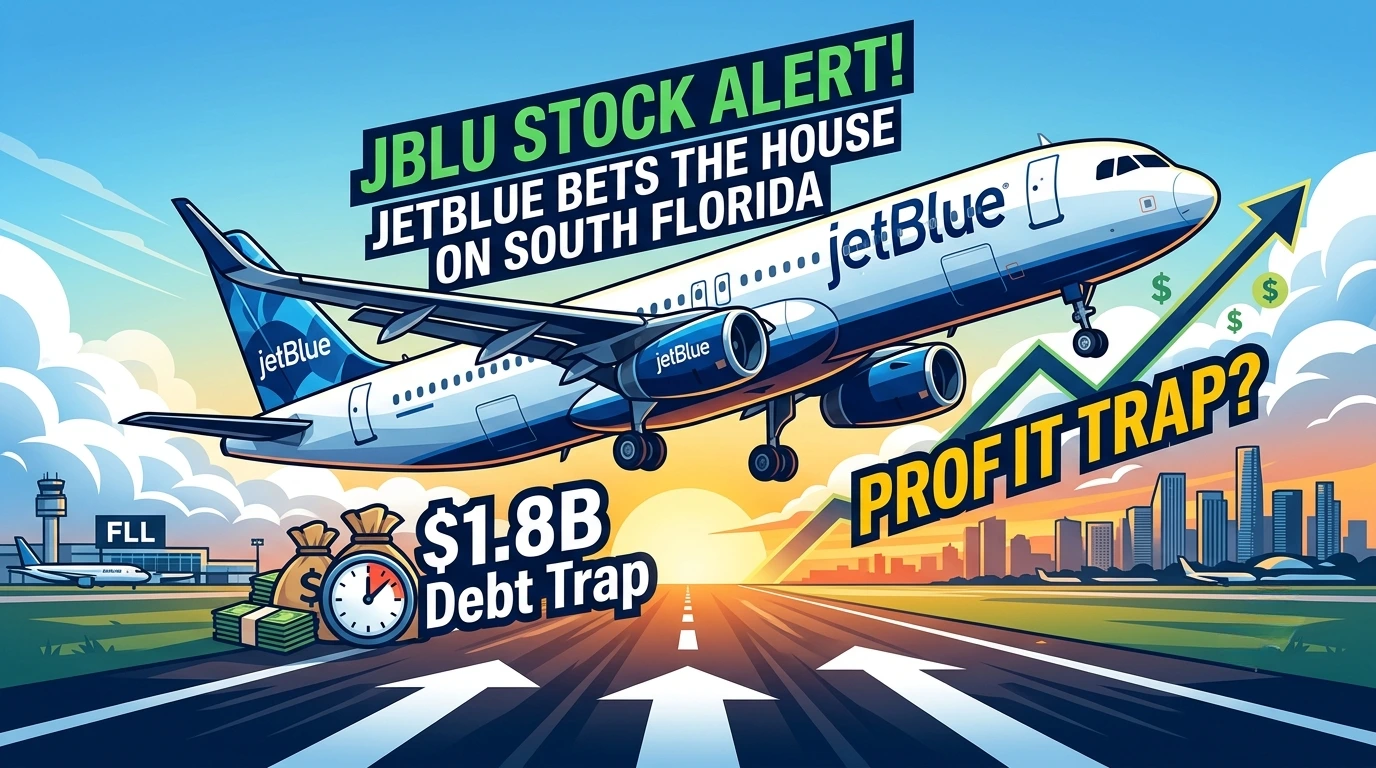
JetBlue Airways (NASDAQ: JBLU) is pulling off one of the most aggressive tactical realignments in recent aviation history. Just days after launching the single largest schedule expansion in the carrier’s history at Fort Lauderdale-Hollywood International Airport (FLL), Wall Street is sharply divided on whether this high-stakes pivot will save the company or lead it toward a major restructuring.
For retail investors and market spectators, the drama unfolding behind the scenes makes JetBlue a critical ticker to watch this summer.
The Big Pivot: Capitalizing on the Collapse of Spirit Airlines
JetBlue’s latest operational surge is a direct response to a massive vacuum in the low-cost carrier market. Following the dramatic collapse of Spirit Airlines earlier in 2026, JetBlue has moved aggressively to capture the territory left behind in South Florida.
The numbers behind JetBlue’s recent expansion paint a clear picture of its corporate strategy:
- Massive Volume Increase: JetBlue’s daily departures from Fort Lauderdale are up more than 75% year-over-year, climbing past 125 daily flights with plans to reach 150 by winter.
- The Premium Play: Rather than competing strictly on cheap fares, JetBlue is deploying its highly profitable Mint premium service (featuring the only lie-flat beds on routes to San Diego, Los Angeles, and San Francisco) to capture high-margin business travelers.
- The Gate Grab: CEO Joanna Geraghty confirmed the airline is actively angling for up to 30 gates at FLL to anchor its long-term future.
The $1.8 Billion Reality Check Facing Investors
While the expansion looks highly lucrative on paper, the underlying financials present a stark contrast that has institutional analysts sounding the alarm.
On July 6, 2026, Raymond James downgraded JBLU stock from Market Perform to Underperform. The core reason? A looming capital structure crunch. JetBlue is currently facing a massive $1.8 billion balloon payment due in 2029.
With a low financial strength rating (3 out of 10 on major equity scorecards) and elevated input costs, the market is pricing in serious long-term risk. Analysts note that if current revenue growth can’t offset these debt obligations, the airline could face an ultimate restructuring scenario by the end of the decade.
Market Performance: A Deep Disconnect
Despite the long-term debt anxieties, JetBlue’s short-term stock performance shows a highly volatile asset that momentum traders are loving.
| Metric | Current Status (July 2026) |
|---|---|
| Share Price Range | Fluctuating between $5.50 and $6.00 |
| Price-to-Sales (P/S) Ratio | 0.25 (Significantly lower than historical averages, signaling undervaluation based on top-line revenue) |
| YTD Momentum | The stock remains up roughly 25% Year-to-Date from its January low of $4.59 |
| Insider Activity | Net selling of approximately $0.4 million in shares over the past 90 days |
The Bottom Line: JetBlue is enjoying strong top-line revenue momentum, driven by an impressive 6.5% increase in revenue per available seat mile (RASM) earlier this year. However, the corporate narrative is now a race against time: Can the explosive growth in South Florida generate enough free cash flow to clear the company’s massive debt hurdle before 2029?

Sedha Patel is a personal finance strategist with over 5 years of experience analyzing consumer banking trends, liquidity management, and wealth preservation. With a professional background in accounting and corporate finance, Sedha specializes in translating macro monetary policy into practical money moves for everyday savers. When not dissecting market data, Sedha researches fixed-income allocation models and tax-advantaged investing strategies.