
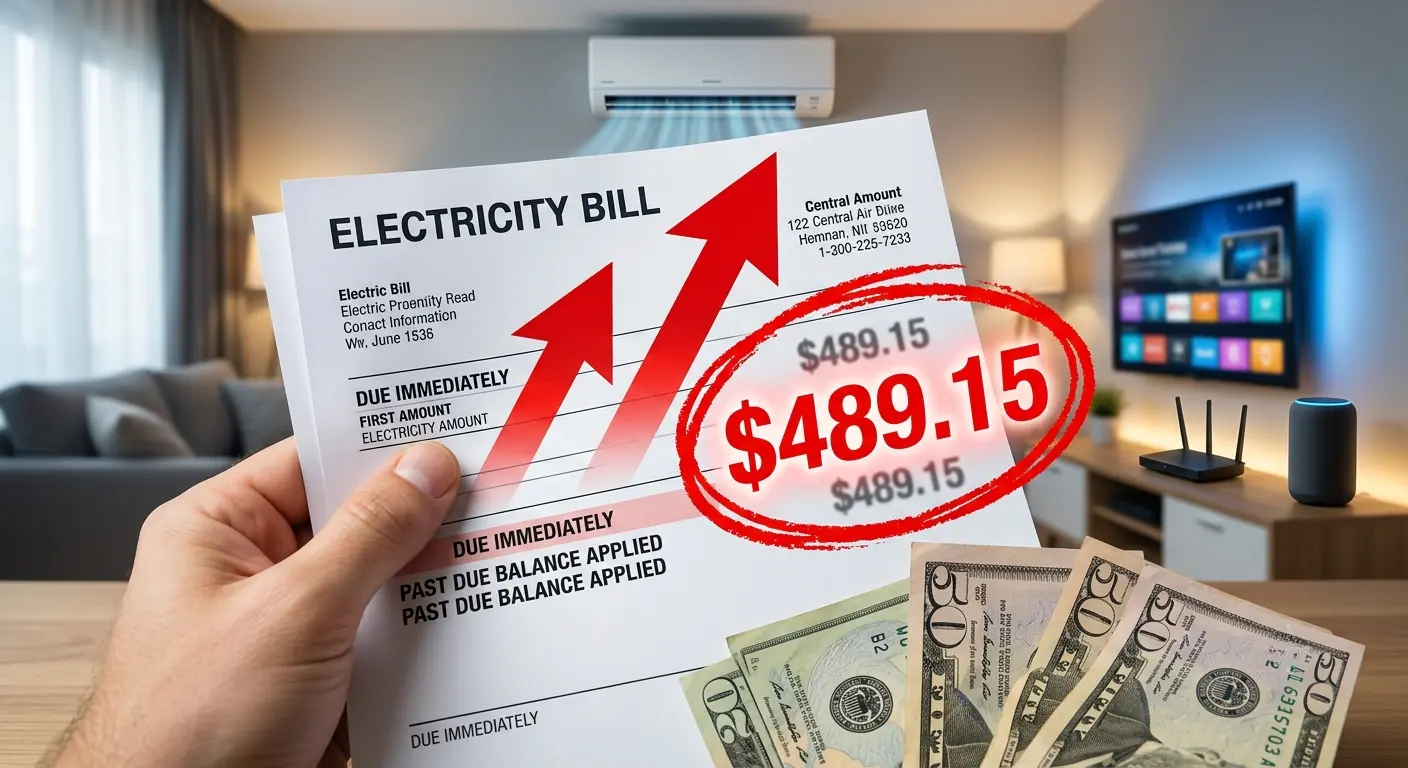
If you opened your latest utility bill and felt a sudden wave of shock, you are far from alone. Across the United States, millions of homeowners are seeing their monthly electric charges jump by 20% to 40%, even when their everyday habits, AC settings, and appliance usage haven’t changed at all.
When your usage stays flat but your bill skyrockets, it feels like a mistake. However, in almost all cases, it isn’t a billing error.
Here is the hidden mechanism behind why your power bill surged—and how to stop paying more for the exact same amount of energy.
Table of Contents
1. The “Tiered Pricing Trap” (Why 10% More Power Can Double Your Bill)
With most everyday items, buying in bulk gets you a discount. Electricity works in reverse.
Many electric utilities across the U.S. operate on tiered (or inverted block) rate structures. Under this system, you pay a baseline rate for your initial block of electricity each month (e.g., your first 500 kWh). Once your household crosses that baseline limit, every additional kilowatt-hour is billed at a significantly higher secondary rate.
The Math in Action:
Imagine your baseline rate is 15¢ per kWh for the first 800 kWh. During an unusually hot week, you run a fan or air conditioner slightly longer, pushing your total usage from 800 kWh to 1,000 kWh.
That extra 200 kWh doesn’t cost 15¢—it kicks into Tier 2 at 28¢ per kWh. Even though your total power consumption only went up by 25%, your actual bill total jumps by over 40% because of the tier crossover.
TIER 1 (Baseline: 0–800 kWh) ➔ $0.15 / kWh │
TIER 2 (Over 800 kWh Limit) ➔ $0.28 / kWh (SURGE) │
2. Soaring Delivery Fees & Fixed Utility Rate Hikes
When you look at your utility statement, your total cost is divided into two primary sections: Supply (Generation) and Delivery (Distribution).
- Delivery Fee Increases: Utility companies are passing down multi-billion-dollar grid modernization costs, storm repair expenses, and infrastructure upgrades directly to residential customers. Public Utility Commissions (PUCs) across several states have approved double-digit rate increases on these delivery charges.
- Rising Fixed Connection Charges: Monopoly utilities have steadily increased mandatory monthly base fees. These are flat charges you pay simply to stay connected to the power grid, regardless of whether you turn on a single light bulb all month.
3. High-Energy “Vampire Draws” You Aren’t Tracking
Even if you aren’t intentionally using more electricity, subtle factors can quietly push your household into higher pricing tiers:
- Aging Appliance Efficiency Drops: Older refrigerators, central heat pumps, or water heaters lose efficiency over time, pulling 2x to 3x more current to maintain the same temperatures.
- Phantom Energy Loads: Continuous standby power drawn by smart TVs, gaming consoles, EV chargers, and connected home hubs can account for up to 10% of total household energy usage.
3 Immediate Steps to Stop the Surge
If you want to pull your monthly bill back down, start with these three targeted actions:
1. Monitor Your Tier Thresholds
Log into your utility provider’s online portal or app to check your daily consumption graph. Locate your state’s baseline tier limit and set up an alert to warn you when your household reaches 80% of that baseline.
2. Switch to Time-of-Use (TOU) Rates
If your utility offers a TOU plan, energy used during “off-peak” hours (typically overnight and late morning) costs significantly less. Running your dishwasher, laundry dryer, or electric vehicle charging exclusively during off-peak windows can slash your variable supply costs without reducing your comfort.
3. Audit Your Monthly Statement
Check the line items on your latest bill against the same month from last year. Look closely at two metrics:
- Total kWh consumed (Is usage actually higher, or did the per-unit rate increase?)
- Delivery/Fixed Charges (Did a new state rate hike go into effect?)
Sources & Data References:
- Data on residential electricity rates sourced from the U.S. Energy Information Administration (EIA) Electric Power Monthly.
- Inflation and energy cost indices derived from the U.S. Bureau of Labor Statistics Consumer Price Index.

Sedha Patel is a personal finance strategist with over 5 years of experience analyzing consumer banking trends, liquidity management, and wealth preservation. With a professional background in accounting and corporate finance, Sedha specializes in translating macro monetary policy into practical money moves for everyday savers. When not dissecting market data, Sedha researches fixed-income allocation models and tax-advantaged investing strategies.